

When Everything Slows
Living and farming through the deep freeze of winter

Before we begin: I’m in the final months before welcoming this baby, and I’d love to spend that time recording episodes of the Belonging podcast that feel genuinely helpful and supportive to you. If there’s something you’re moving through, curious about, or longing to hear reflected back, you can reply to this email or leave a comment and let me know.
Winter here on the farm is not a season you observe, it is a season you negotiate with.
It might arrives with some softness and metaphor, but I find (especially post holidays when January really settles in to your bones) that the winter freeze is what really snaps you into the deeper medicine of winter. It tightens bolts, freezes water lines, stiffens fingers inside gloves. It asks its questions early in the morning, before coffee, before daylight, before you’ve fully come back into yourself.
Can you keep the water flowing?
Can you keep everyone warm?
Can you move slowly enough to notice what’s at risk?
On the farm, winter care is not incidental, it’s deliberate.
Water is always first. Heated buckets and stock tank heaters work hard, but still we break ice, watching the steam rise and knowing how quickly it could freeze again. Deep bedding becomes insulation. Hay is refilled more often - not because the animals want more, but because cold demands more. More calories. More rest. More stillness.
You learn the animals differently in winter. Who drinks first. Who waits. Who conserves energy by standing perfectly still. Winter doesn’t reward efficiency, it rewards attunement.
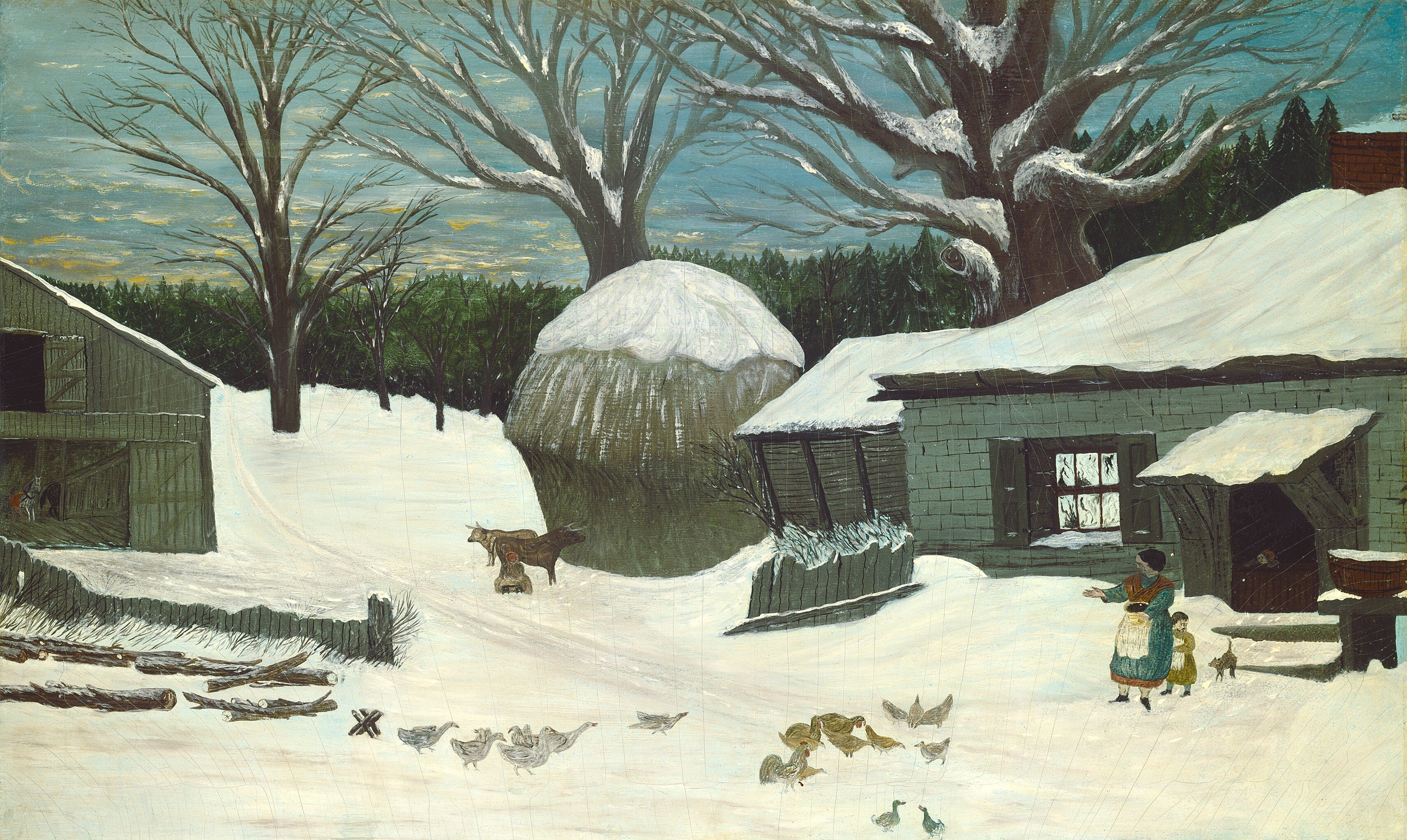
New England Farm in Winter, 1850 by American 19th Century
The cold is not just something happening outside, it’s happening inside us too.
Winter is a nervous system event. It pulls energy inward. It tightens, concentrates, slows. Digestion changes. Sleep deepens or fractures. Muscles ache in unfamiliar ways. Emotions move closer to the surface once the usual distractions fall away. There is less stimulation, less movement, less escape.
In a culture that expects constant output, the body’s winter instincts—slower energy, deeper rest, turning inward—can be mistaken for a personal shortcoming rather than a seasonal intelligence. Here, it’s simply reality. The body knows what to do in cold. It prioritizes survival over expansion. It asks for warmth, for fat, for rest, and for rhythm.
Living through winters in the San Francisco Bay Area of California taught me something very different. There, winter was a season I noticed. A shift in light and a slowing, maybe. A time for reflection that still allowed for motion. Life continued with relatively soft edges.
Here in upstate New York, winter interrupts.
Here, winter does not suggest a slowdown, it enforces one. It dismantles routine and demands presence. It notices you. It sees where you rush, where you overextend, where you rely on convenience instead of care.
Doing winter here is changing my expectations of myself. It’s teaching me that rest is not indulgence, it is recalibration. It is teaching me that resilience is not about pushing through, but about pacing wisely when every task takes more time, more energy, more attention.
Winter removes exits. Fewer gatherings. Fewer distractions. Fewer ways to outrun what’s unresolved. Like the trees stripped bare, there is less to hide behind.
And this is where winter care cannot stop at the edges of our own homes and farms.
Because some winters are not only climatic. Some are social. Some are political. Some are lived in fear.
As cold deepens across the country, there are communities experiencing another kind of freeze - where safety feels uncertain, where families are bracing not just against weather but against the threat of sudden separation, detention, or violence. The ongoing ICE raids in Minnesota and across the United States are one example of this: neighbors pulled into crisis, fear rippling through communities already stretched thin, nervous systems pushed into constant vigilance.
Winter care, in these moments, looks different but it comes from the same root:
Checking on each other.
Sharing resources.
Offering warmth where systems have gone cold.
Refusing to look away.
On the farm, winter teaches us that care is not dramatic. It is repetitive, it is breaking ice again and again, it is showing up twice a day, every day, because bodies depend on it, it is noticing what could freeze if left unattended.
The same is true beyond the fence lines.
Winter reminds us that warmth is not something we find. It is something we generate together - through presence, consistency and attention.
Details matter. Bodies matter. Neighbors matter.
And winter, for all its severity, has a way of quieting the world enough that this truth becomes impossible to ignore.
The line about winter rewarding attunement not efficiency really landed. That shift from observing a season to negotiating with it is something I never quite understood living in a mild climate, but now makes complete sense. Winter as a nervous system event forcing you to pace differentlyinstead of pushing through, thats the whole fram nobody talks about when romanticizing farm life
Really delightful read <3